Filter This

Brent Dietz, Director of Corporate CommunicationsApril 9, 2018

This article first appeared on Network World, by IDG contributor Brent Dietz.
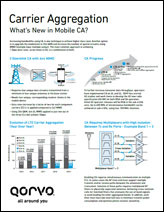
Filter ThisConnected devices must transmit cellular signals, Wi-Fi, Bluetooth and GPS across multiple frequency bands while avoiding interference. We might immediately think of smartphones, but the same is true of shark fins mounted atop a car’s roof, cellular base stations, radar and communications systems, and industrial, scientific or medical applications connected to the Internet of Things (IoT). This is where filters come in.

With a bunch of frequencies competing for attention, filters allow desired frequencies while rejecting unwanted ones. Put another way, filters are like Gandalf in J.R.R. Tolkien’s “The Lord of the Rings”:

“You shall not pass!”

Devices today contain as many as 30 to 40 filters to combat interference. The situation is likely to become even more complex with next-generation high-end smartphones requiring even more filters.

A smartphone with #nofilter is a paperweight.
 

Filtering challenges

Filters are an essential tool for RF design engineers, but they also have their challenges. For starters, filter performance varies with temperature. Filters in today’s devices are subject to average temperatures of 60 degrees Celsius (140 degrees Fahrenheit) or greater, while sitting in a room temperature environment of 25 degrees Celsius (77 degrees Fahrenheit). Filters embedded in the shark fin or roof of a car get even hotter.

The hotter the filter, the more difficult it is to isolate certain frequencies — and the more likely it is for signals to “drift” into neighboring frequency bands.

“I’m a big fan of static, white noise, party lines and dropped calls,” said no one, ever.

As more new bands are assigned closer to existing ones, managing temperature drift is critical. We’re also seeing the proliferation of carrier aggregation (CA) where cellular service providers are combining as many as five carrier channels to increase network performance, and precise filtering is a must.

Download Filters For Dummies® From QorvoThe RF industry is now developing low-drift and no-drift filter technology to solve temperature problems. These surface acoustic wave (SAW) and bulk acoustic wave (BAW) filters are highly stable over temperature changes to meet demanding performance requirements for new and emerging devices.

As I mentioned, next-generation high-end smartphones also need more filters. Like everything in RF, there’s a finite amount of real estate for these components. Engineers have had to find ways of combining filters to deliver higher performance in a smaller space.

Enter some of my favorite terms in the RF dictionary.

Duplexers, triplexers, quadplexers — yes, even hexaplexers — are all part of a class of devices called multiplexers. Multiplexers combine multiple filters into a single device, which helps designers save space, simplify design, and meet performance requirements, while avoiding interference.

Wi-Fi presents a final challenge. While some luddites still use smartphones for texting and calling, most of us spend our time browsing the web, streaming videos and posting to social media. LTE and Wi-Fi bands are extremely close together, and left unfiltered, Wi-Fi signals can desensitize LTE reception on a device. Desensitization causes a slew of dreadful things, including dropped or interrupted calls.

For this, we need a special kind of filter.

Coexistence filters allow Wi-Fi and LTE signals to exist in harmony. The name suits them well. These filters reject closely adjacent frequencies, so we can view our friends’ Instagram stories without missing a call from Mom. They’re also important in the connected car, where LTE, Wi-Fi, Bluetooth, GPS and vehicle-to-vehicle (V2V) and vehicle-to-infrastructure (V2I) must coexist without interference.

Without filters, we’d have quite the wireless traffic jam.

In today’s mobile environment, the number of bands required in one device is staggering — and the trend will only increase as we approach 5G. Supporting all these bands causes interference issues, requiring filters to save the day. Without filters, networking simply doesn’t work.

Stay up to date with us.

Sign up for notification on new products, product/process change notifications (PCNs) and end of life (EOL) alerts.

Sign Up

Qorvo products are at work connecting, protecting and powering the planet. We bring core radio frequency (RF) and power technologies and solutions to automotive, consumer, defense & aerospace, industrial & enterprise, infrastructure and mobile markets.

Stay Connected

  • Facebook
  • X
  • LinkedIn
  • YouTube
  • Products
  • Solutions
  • Design Hub
  • New Products
  • Product Compliance
  • Blog Posts
  • Events & Trade Shows
  • News Releases
  • Success Stories
  • Technical Articles
  • About Us
  • Careers
  • Corporate Videos
  • Quality
  • Locations
  • Investors
  • How to Buy
  • Forums
  • Portals
  • Contact Us
  • Subscription Center
Site MapFeedbackLegalPrivacySupply Chain Transparency

© 2026 Qorvo US, Inc

|

+1-833-641-3810

Filter This

Brent Dietz, Director of Corporate CommunicationsApril 9, 2018

This article first appeared on Network World, by IDG contributor Brent Dietz.

Filter ThisConnected devices must transmit cellular signals, Wi-Fi, Bluetooth and GPS across multiple frequency bands while avoiding interference. We might immediately think of smartphones, but the same is true of shark fins mounted atop a car’s roof, cellular base stations, radar and communications systems, and industrial, scientific or medical applications connected to the Internet of Things (IoT). This is where filters come in.

With a bunch of frequencies competing for attention, filters allow desired frequencies while rejecting unwanted ones. Put another way, filters are like Gandalf in J.R.R. Tolkien’s “The Lord of the Rings”:

“You shall not pass!”

Devices today contain as many as 30 to 40 filters to combat interference. The situation is likely to become even more complex with next-generation high-end smartphones requiring even more filters.

A smartphone with #nofilter is a paperweight.
 

Filtering challenges

Filters are an essential tool for RF design engineers, but they also have their challenges. For starters, filter performance varies with temperature. Filters in today’s devices are subject to average temperatures of 60 degrees Celsius (140 degrees Fahrenheit) or greater, while sitting in a room temperature environment of 25 degrees Celsius (77 degrees Fahrenheit). Filters embedded in the shark fin or roof of a car get even hotter.

The hotter the filter, the more difficult it is to isolate certain frequencies — and the more likely it is for signals to “drift” into neighboring frequency bands.

“I’m a big fan of static, white noise, party lines and dropped calls,” said no one, ever.

As more new bands are assigned closer to existing ones, managing temperature drift is critical. We’re also seeing the proliferation of carrier aggregation (CA) where cellular service providers are combining as many as five carrier channels to increase network performance, and precise filtering is a must.

Download Filters For Dummies® From QorvoThe RF industry is now developing low-drift and no-drift filter technology to solve temperature problems. These surface acoustic wave (SAW) and bulk acoustic wave (BAW) filters are highly stable over temperature changes to meet demanding performance requirements for new and emerging devices.

As I mentioned, next-generation high-end smartphones also need more filters. Like everything in RF, there’s a finite amount of real estate for these components. Engineers have had to find ways of combining filters to deliver higher performance in a smaller space.

Enter some of my favorite terms in the RF dictionary.

Duplexers, triplexers, quadplexers — yes, even hexaplexers — are all part of a class of devices called multiplexers. Multiplexers combine multiple filters into a single device, which helps designers save space, simplify design, and meet performance requirements, while avoiding interference.

Wi-Fi presents a final challenge. While some luddites still use smartphones for texting and calling, most of us spend our time browsing the web, streaming videos and posting to social media. LTE and Wi-Fi bands are extremely close together, and left unfiltered, Wi-Fi signals can desensitize LTE reception on a device. Desensitization causes a slew of dreadful things, including dropped or interrupted calls.

For this, we need a special kind of filter.

Coexistence filters allow Wi-Fi and LTE signals to exist in harmony. The name suits them well. These filters reject closely adjacent frequencies, so we can view our friends’ Instagram stories without missing a call from Mom. They’re also important in the connected car, where LTE, Wi-Fi, Bluetooth, GPS and vehicle-to-vehicle (V2V) and vehicle-to-infrastructure (V2I) must coexist without interference.

Without filters, we’d have quite the wireless traffic jam.

In today’s mobile environment, the number of bands required in one device is staggering — and the trend will only increase as we approach 5G. Supporting all these bands causes interference issues, requiring filters to save the day. Without filters, networking simply doesn’t work.

Stay up to date with us.

Sign up for notification on new products, product/process change notifications (PCNs) and end of life (EOL) alerts.

Sign Up

Qorvo products are at work connecting, protecting and powering the planet. We bring core radio frequency (RF) and power technologies and solutions to automotive, consumer, defense & aerospace, industrial & enterprise, infrastructure and mobile markets.

Stay Connected

  • Facebook
  • X
  • LinkedIn
  • YouTube
  • Products
  • Solutions
  • Design Hub
  • New Products
  • Product Compliance
  • Blog Posts
  • Events & Trade Shows
  • News Releases
  • Success Stories
  • Technical Articles
  • About Us
  • Careers
  • Corporate Videos
  • Quality
  • Locations
  • Investors
  • How to Buy
  • Forums
  • Portals
  • Contact Us
  • Subscription Center
Site MapFeedbackLegalPrivacySupply Chain Transparency

© 2026 Qorvo US, Inc

|

+1-833-641-3810

Qorvo
  • Products
  • Solutions
  • Design Hub
  • Support
  • About Us
Qorvo
Qorvo
Qorvo
  • Products
  • Solutions
  • Design Hub
  • Support
  • About Us
Qorvo
Qorvo