Our 10 Most Popular Blogs of 2018
 Trivia time! What do automotive quality standards, GaN power amplifiers, Wi-Fi interference and cable networks have in common? The answer? Absolutely nothing — except that they’re all topics of Qorvo’s Top 10 blog posts for 2018! Once again, Qorvo’s talented bevy of blog writers and tech experts delivered wonder and awe to faithful readers as they skillfully negotiated tech topics ranging from BAW to GaN to FWA to ESD and DOCSIS 3.1.
The Qorvo Blog is truly a one-stop shop for acronyms, er, tech topics of interest to the entire RF industry. We hope you’ll take a moment to peruse our most read articles from 2018 … from one to ten.

#1 – Automotive Quality Standards 101: What Qualification Really Gets You
A qualified automotive part may have similar specs as a commercial product, but don’t be fooled. Learn what those stringent standards — like IATF 16949, AEC-Q100 and AEC-Q200 — and additional tests really mean. Read more >

#2 – 5 Things to Consider When Designing Fixed Wireless Access (FWA) Systems
One of the earliest uses of 5G will be FWA, which promises to deliver gigabit internet speeds. But every new technology brings new design challenges, and FWA is no different. Take a technical deep dive into the five decisions you should evaluate to minimize the cost, complexity, size and power dissipation of a FWA system. Read more >

#3 – Resolving Interference in a Crowded Wi-Fi Environment Using BAW Filters
There are many ways to address interference issues when designing Wi-Fi access points, but high-Q bandedge filters are one strategy to address the biggest coexistence issues from the outset and make use of every bit of spectrum available. Read more >

#4 – GaN HEMT Models 101: How Do Nonlinear Models Help with GaN PA Design?
GaN power amplifier (PA) design requires some different approaches and thinking compared to LDMOS or GaAs. Learn how nonlinear simulation models, like those from Modelithics, can help speed up your design processes, in Part 1 of a two-part introductory series. Read more >
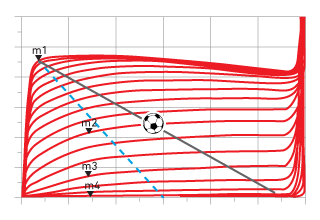
#5 – Model-Based GaN PA Design Basics: What’s in an I-V Curve?
Understanding the impact and nuances of current-voltage (I‑V) curves is a fundamental part of learning how to design GaN PAs. Read Part 2 in our introduction on the basics of using nonlinear models to make your design process more accurate and efficient. Read more >
#6 – Enabling 10 Gbps Cable Networks with Full Duplex DOCSIS 3.1
Full Duplex DOCSIS 3.1 — or FDX for short — is one approach CATV operators are trying to increase the capacity of their HFC networks to support next-gen data requirements. Learn more about this new technology, its biggest challenges and how MSOs and RF suppliers are bringing it to life. Read more >

#7 – The Impact of the IoT on Energy Efficiency
From large, commercial office buildings to your own home, the Internet of Things (IoT) offers an array of energy efficiency benefits. Qorvo’s Cees Links explains how in the third of a five-part series on the IoT. Read more >

#8 – What’s Best? Wi-Fi 6 (802.11ax) or 5G?
Cees Links weighs in on which technology might win in the battle for wireless connectivity — the newest generation of Wi-Fi or “the next G.” (A hint? It's not what you think.) Read more >
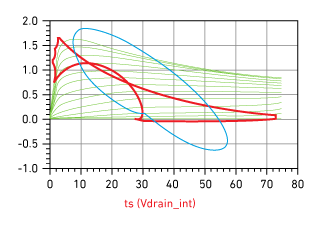
#9 – Model-Based GaN PA Design Basics: The What and Why of Intrinsic I-V Waveforms
Simulating current-voltage waveforms at intrinsic ports can help improve your GaN power amplifier design and optimize for a particular mode or class of operation. Guest blogger Dr. Larry Dunleavy of Modelithics explains how in this ongoing blog series about GaN HEMT nonlinear models. Read more >

#10 – How NB-IoT and LTE-M Fit into the IoT Ecosystem: The Future of Cellular IoT
LTE‑M. NB‑IoT. eMTC. LTE Cat‑M1. LTE Cat‑NB. It's a veritable mouthful of acronym soup, all to describe two categories of cellular IoT (or mobile IoT). This blog explores the two biggest standards, their potential uses and some implementation options for device makers looking to add cellular connectivity. Read more >