Advancing Wideband RF Power: Next-Generation GaN-on-SiC SSPAs Optimize SWaP-C and Mission Reliability
Across defense and aerospace programs, the expectations placed on RF power systems continue to intensify. Radar, SATCOM, electronic warfare (EW) and high-duty test environments demand various combinations of higher output power, wider bandwidth, improved linearity and increased operational reliability—often within shrinking size, weight and power consumption (SWaP) constraints.
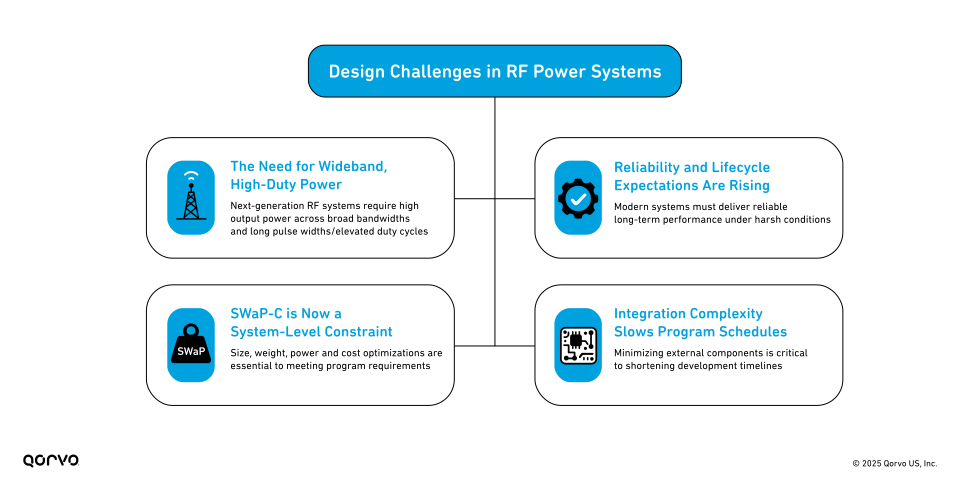
These pressures create a set of design challenges that legacy RF power architectures can no longer solve. As programs evolve and timelines compress, engineering teams must rethink how they generate and manage RF power at the system level. The challenges include:
- The Need for Wideband, High-Duty Power
Next-generation radar, SATCOM and EW systems increasingly operate across multiple frequency bands—S, C, X, Ku, K and Ka—and need to support both continuous-wave (CW) and high-duty-cycle pulsed operation. This shift places significant demands on RF power architectures, which must deliver high output power across broad bandwidths while maintaining stable performance under continuous or near-continuous operating conditions. At the same time, these systems must manage elevated power densities without compromising thermal efficiency. While traditional RF power combining architectures can generate the required power, they often struggle to provide the duty-cycle flexibility, efficiency and thermal robustness needed in modern wideband applications. - Reliability and Lifecycle Expectations Are Rising
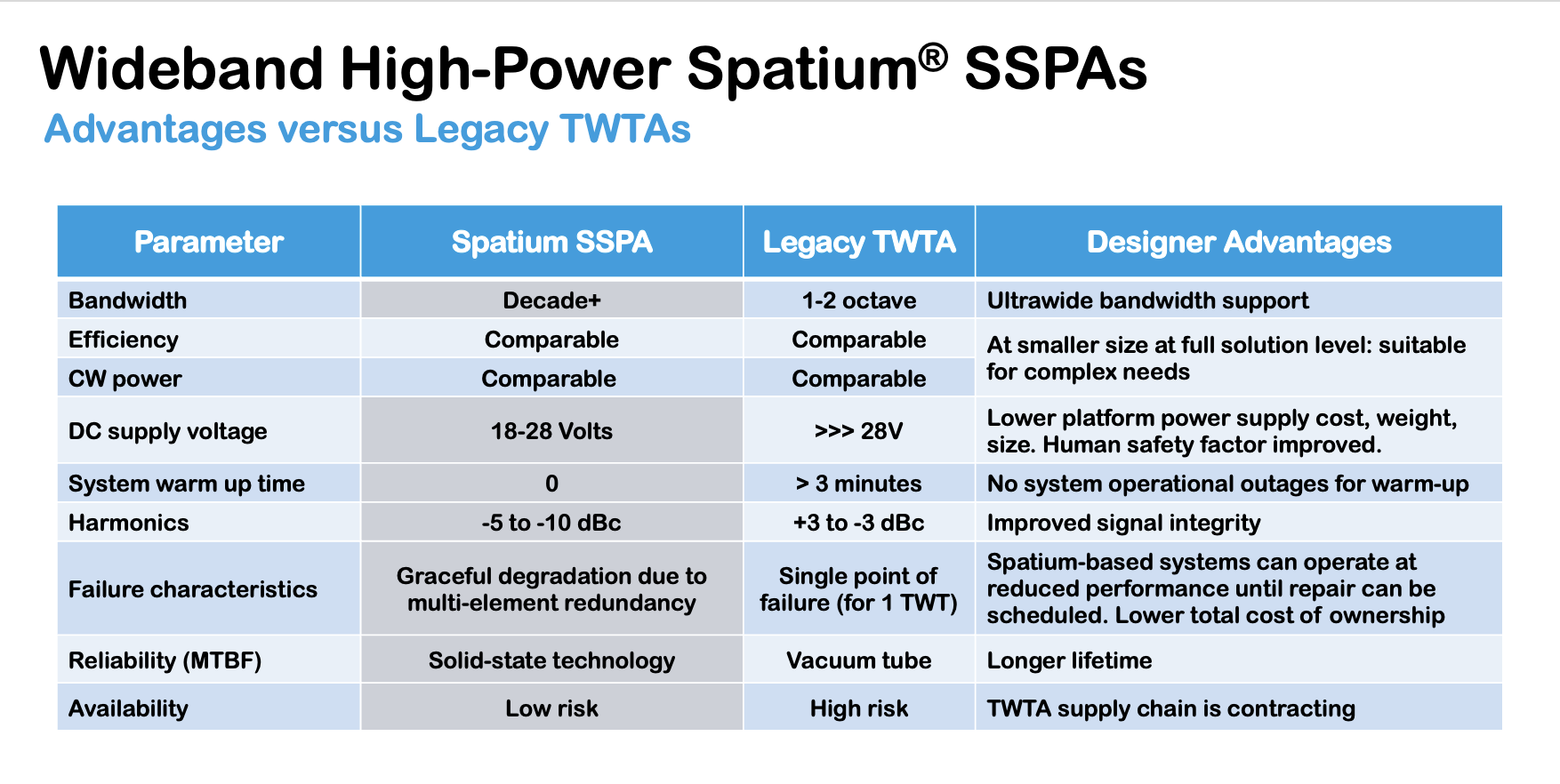
Across ground, airborne and shipborne platforms, reliability expectations continue to climb. Modern systems require amplifiers with high mean time between failures (MTBF), predictable long-term performance and the ability to operate reliably under harsh environmental and mission conditions. Reducing maintenance cycles and enabling easier field replacement are now essential to maintaining readiness and controlling lifecycle costs. However, systems built around aging traveling wave tube amplifiers (TWTAs) face increasing challenges, including supply-chain constraints, end-of-life component issues and rising sustainment risk as tube technologies become more difficult to source and support. - SWaP-C Is Now a System-Level Constraint
System integrators are under pressure to reduce size, weight, power consumption and cost—collectively known as SWaP-C—across entire subsystems. Amplifiers that are physically large, thermally inefficient or dependent on multiple external components can have cascading impacts throughout the design. These inefficiencies often increase the size and complexity of power supplies, cooling systems and mechanical enclosures, while also extending qualification and certification timelines. As system architectures evolve, high-density, thermally optimized amplification solutions are becoming essential to meeting program-level SWaP-C requirements. - Integration Complexity Slows Program Schedules
Many existing RF power solutions require multiple external elements, such as separate driver stages, bias control boards and protection circuitry. Each additional component increases design effort, introduces more potential failure points, adds new qualification steps and ultimately extends program schedules. As timelines compress and system architectures converge, engineering teams need amplification solutions that reduce the number of external modules and streamline system-level validation. Simplified, pre-integrated designs can meaningfully shorten development cycles and reduce overall program risk.
Half the size, Built for the Mission
Qorvo’s newest SSPAs enable up to 50 percent smaller and one-third lighter system-level solutions compared to legacy traveling wave tube amplifiers (TWTAs), supporting mission continuity and long-term reliability in demanding RF environments.
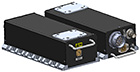
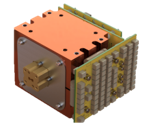
QPR3238: 32-38 GHz Wideband GaN SSPA Module
What an Ideal Next-Generation Wideband SSPA Solution Should Deliver
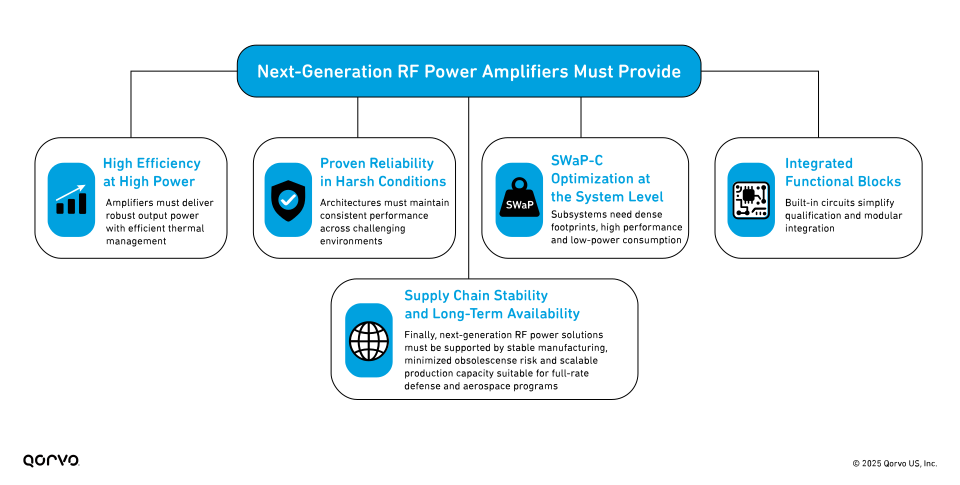
To address these challenges, a next-generation RF power amplifier must provide a combination of efficiency, reliability, integration and long-term availability that aligns with modern program requirements.
- High Efficiency at High Power
An effective solution must offer robust output power across S–Ka bands, maintain consistent efficiency under both CW and high-duty-cycle operation and minimize heat generation to simplify thermal design. High efficiency directly reduces cooling requirements and enables smaller, lighter system architectures. - Proven Reliability in Harsh Conditions
Next-generation systems require ruggedized packaging, robust thermal paths and amplifier architectures capable of achieving high MTBF with predictable end-of-life behavior. Solutions must withstand vibration, shock and environmental stressors to ensure consistent performance across diverse mission environments. - SWaP-C Optimization at the System Level
Ideal architectures offer compact form factors, lower system weight and improved thermal performance that enables smaller cooling subsystems. By consuming less power and reducing thermal load, such solutions help decrease operating costs while streamlining overall subsystem design. - Integrated Functional Blocks
Modern SSPAs should incorporate built-in bias control, integrated driver stages and a pre-aligned RF chain that simplifies system qualification. A one-module approach reduces design complexity, lowers integration risk and accelerates schedules by minimizing the number of separate components that must be sourced, tested and validated. - Supply Chain Stability and Long-Term Availability
Finally, next-generation RF power solutions must be supported by stable manufacturing, minimized obsolescence risk and scalable production capacity suitable for full-rate defense and aerospace programs. Long-term availability is critical to ensuring sustainment, modernization and program continuity.
These performance, reliability and integration expectations are increasingly difficult to meet with vacuum-tube technologies or lower-efficiency planar SSPAs—driving an industry-wide shift toward more advanced, wideband solid-state architectures.
Wideband GaN-on-SiC SSPAs: Improving Power Density, Thermal Performance and System Reliability
Among the various solid-state approaches available today, Qorvo’s wideband GaN-based amplifier technologies—including implementations that use spatial combining techniques—provide a practical illustration of how modern SSPA architectures can address the performance, reliability and integration needs described above. These solutions demonstrate how wideband GaN devices, efficient power combining and integrated control functions can be applied to meet system-level requirements across radar, SATCOM, EW and test environments.
Qorvo’s approach brings several characteristics that directly map to the needs of today’s radar, SATCOM and EW systems:
- Wideband, high-efficiency RF output across S-, C-, X-, Ku-, K- and Ka-bands
- High reliability and long MTBF due to GaN-on-SiC technology and ruggedized module construction
- Optimized SWaP-C at the total solution level, often replacing TWTA-based systems with smaller, lighter alternatives
- Integrated bias control and driver stages for ease of system integration
- Pre-tested, pre-aligned modules that shorten qualification timelines
- A proven, scalable platform supported by vertically integrated manufacturing
These characteristics make Qorvo solutions suitable for replacing aging TWTAs, improving system reliability and meeting the performance and SWaP-C expectations of modern defense and aerospace programs.
Conclusion
Modern RF systems demand more than incremental improvements—they require amplifier architectures that are efficient, reliable, broadband and simple to integrate. As TWTAs face supply limitations and higher sustainment costs, solid-state technology provides a compelling path forward. Solutions that combine high power, broad bandwidth, integrated functionality and rugged reliability will define the next generation of radar, EW, SATCOM and test platforms.
Qorvo’s GaN-based amplifier solutions are engineered to meet these exact demands, providing a field-proven, scalable technology path for programs seeking to modernize their RF power infrastructure.
For more information, read our press release on Qorvo's new Spatium SSPAs replacing legacy TWTAs. Qorvo’s newest SSPAs enable up to 50 percent smaller and one-third lighter system-level solutions compared to legacy traveling wave tube amplifiers (TWTAs), supporting mission continuity and long-term reliability in demanding RF environments.
Go here to learn more about Qorvo’s trusted RF solutions for defense and aerospace—including Spatium SSPAs and GaN-based front ends.